From Rock Bottom To Centre Stage
by Karen Shaw
When Theatre Becomes Something More
The last time Elisha House Recovery Community stepped onto the stage at The Muni in Colne, nobody quite expected what happened next.
Families cried. Strangers hugged. A packed-out theatre sat in complete silence one minute and erupted into applause the next. Men in recovery stood under stage lights and told the truth about addiction — not polished, sanitised versions of it, but the messy, painful, human reality.
And somehow, among all that heartbreak, there was hope too.
I snuck into The Muni in Colne for a cheeky sneak peek at Elisha House Recovery Community’s latest production, Journey of the 12 Steps — and blimey… prepare yourselves.
Raw, funny, heartbreaking and full of hope, it isn’t just a performance — it’s real life under stage lights.
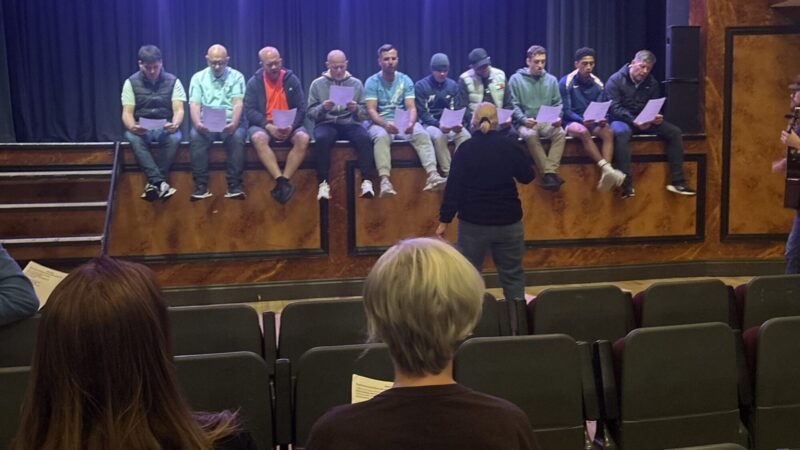
Theatre of Hope in rehearsal at the Muni
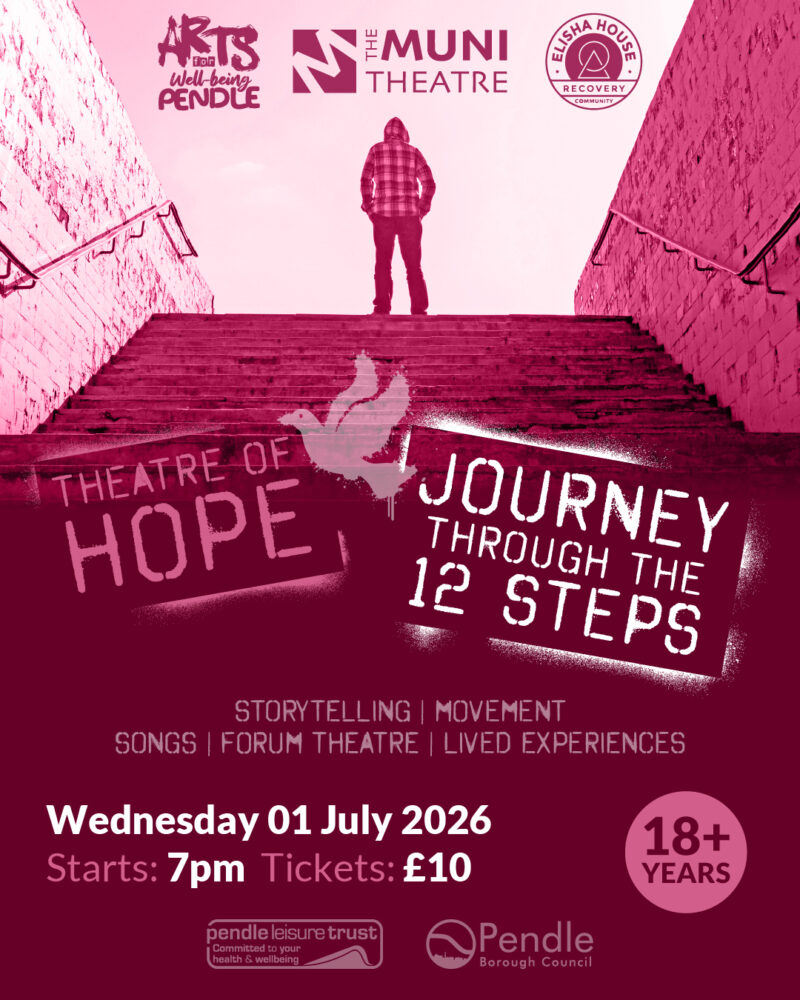
Returning to the stage on Wednesday, 1st July, this year’s show promises everything from belly laughs to lump-in-the-throat moments, blending music, storytelling, movement and brutally honest real-life experiences from the men of Elisha House themselves.
Here’s what happened when I stepped behind the curtain…
When I met director Donna Worthington and Pendle Leisure Trust’s Grant Funding Manager, Kathy Titterton, for a sneaky peek at this year’s production, The Muni already felt alive with energy. Ideas were flying around the room, songs drifted across the theatre between rehearsals, and bursts of laughter echoed from backstage.
There was excitement everywhere — that slightly chaotic, creative kind that tells you something special is quietly coming together.
And after seeing even a glimpse of Journey of the 12 Steps, I can honestly say audiences are in for a very powerful night.


I only normally cry watching DIY SOS, but last year’s production had me sobbing harder than a woman who’s just dropped her last Yorkshire pudding down the back of the radiator.
Because this wasn’t just theatre.
This was real life standing centre stage.
The Journey Of The 12 Steps
The production — now in its fourth year — is built around the lived experiences of men recovering from addiction through Elisha House Recovery Community, based in Colne. It blends storytelling, movement, music, forum theatre and scenes created directly from the men’s own experiences, taking audiences through the emotional landscape of the 12 Steps with brutal honesty and unexpected warmth.
Theatre of Hope manages to bring that journey to life without ever feeling preachy.
For those unfamiliar with the 12 Steps, they’re not simply rules for recovery — they’re a framework for rebuilding a life. Originally created through Alcoholics Anonymous, the programme encourages honesty, accountability, connection and self-reflection, helping people confront addiction, repair relationships and rediscover purpose one day at a time.
And somehow, Theatre of Hope manages to bring that journey to life without ever feeling preachy. Instead, it feels human. Messy. Funny. Painful. Real.
“We’re the Theatre of Hope,” Donna tells me. “Everything comes back to hope.”
And she means that literally.

Theatre Of Hope And Forum Theatre
Some of the production uses forum theatre, an interactive style where audiences can interrupt scenes unfolding on stage, shout “Stop!” and suggest different choices or outcomes.
“You’re not just sitting there watching passively,” Donna explains. “The audience becomes part of it. They can ask for a scene to be replayed differently. The actors have to think on their feet.”
It breaks down the invisible barrier between performer and audience — and somehow makes the stories land even harder.
“You realise we can all make different choices,” she says. “That’s what makes it powerful.”
Why Projects Like This Matter
Sitting beside her, Kathy nods. She’s spent years building creative wellbeing projects across Pendle, though she laughs that half her life seems to involve chasing funding applications.
But underneath the humour, frustration sits too. Projects like this change lives, yet survival often depends on short-term grants and endless red tape.
“We don’t actually have funding for this,” Kathy says honestly. “That’s why we’re trying to make it sustainable through the community itself.” This project is powerful, beautiful and vital and must continue.
Her wider creative health programme, Arts for Well-Being in Pendle, already encompasses drama workshops, arts-in-nature projects, dementia support and creative wellbeing sessions. But she believes productions like this do something unique: they bring entirely new people through theatre doors.
And once they’re in, something shifts.
Kathy remembers a couple arriving at Elisha House’s Community Café after last year’s performance.
“They said they’d never been to anything like that before,” she says. “But they absolutely loved it.”
That ripple effect matters. Because Theatre of Hope isn’t really about performance. Not entirely. It’s about connection.
“A Natural High”

And perhaps nobody captures that spirit better than one of the participants in the performance.
He made his stage debut treading the boards in Theatre of Hope’s very first production at The Muni back in January 2025 — and judging by the grin on his face when we sit down backstage, he’s fully embracing his new status as a “seasoned professional.”
“You’re an old pro now,” I joke.
He laughs, shaking his head.
“I’m cacking myself,” he laughs.
“Oh, the anxiety’s unreal. Same as last year. We only had about ten weeks to rehearse then as well.”
But despite the nerves, what stayed with him most wasn’t the fear — it was the feeling inside the room itself.
“It all just fused together,” he says warmly. “It was wonderful. The interaction. Everybody was just completely with us.”
But behind the humour, he speaks honestly about how emotionally exposing the production can feel for the men involved — particularly because so much of it comes directly from lived experience.
“When you come off that stage afterwards, honestly, you feel 20 feet tall.”
Because this isn’t simply acting for him and the others involved. It’s reflection, vulnerability and recovery happening in real time, under stage lights, in front of a live audience.
And yet, somehow, alongside all that fear and emotion, he says performing gave him something else too — something difficult to describe unless you’ve experienced it.
“A natural high,” he says, smiling. “When you come off that stage afterwards, honestly, you feel 20 feet tall.”
For men rebuilding their lives after addiction, that feeling matters more than most people probably realise.
Addiction, Relapse And Recovery

His journey into the Theatre of Hope didn’t begin on a stage. It began much earlier — through addiction, recovery, relapse and survival.
For 33 years, he battled addiction. Then he got clean and stayed clean for more than a decade, helping set up recovery projects and supporting others through addiction themselves.
Until one day, quietly, behind the scenes, he stopped looking after himself.
“Around eight years clean, I started leaving my own recovery behind,” he says. “I lost the humility to say I was struggling.”
I was managing services in Blackpool, Burnley, and Stockport. Then the pandemic hit, and the whole way we worked changed. There was all that pressure. At the same time, I was being tested for cancer and early-onset dementia. I had financial problems, relationship struggles with my wife — everything hit at once.
He survived. Was sectioned. Started using crack again. Lost his job. Cut himself off from family.
“I had places I could go and people I could talk to, but I chose not to because I felt like I had to be tough. I had to look like I could handle everything.”
Three years later, he attempted to take his own life.
“I hung myself.”
He survived. Was sectioned. Started using crack again. Lost his job. Cut himself off from family.
Then came the moment that changed everything.
“I realised I needed to live,” he says quietly. “Not for me — for my family. I rang Carl (manager at Elisha House) and asked if I could come over and get involved with the projects,” he recalls. “He thought I wanted a job and said, ‘I can’t pay you.’”
“I said, ‘No Carl — I’m broken.’”
Three days clean and hanging on by a thread, he walked back into recovery.
It takes courage to tell a story like that publicly. He knows that. But he also believes honesty matters.
“When I look back, I knew what I should’ve done,” he says. “I should’ve reached out earlier.”

Still, there’s no sense of defeat in him now. Quite the opposite. He talks about recovery the way some people talk about rebuilding a house: steady, patient, brick by brick.
And strangely enough, acting has become part of that rebuilding.
“There’s a different level of bonding when you do this together,” he says. “We can sit around talking about addiction all day, but getting up on stage together — vulnerable — that’s different.”
There’s something lovely about hearing a man who’s survived what he has still finding joy in things. Real joy. Not forced positivity. Earned joy.
And now, somehow, that same man who nearly lost everything is standing on stage helping others discover hope for themselves.
Chocolate, Coffee And Steak McCoy’s
When we talk about coping mechanisms nowadays, he laughs and says: “Chocolate, coffee and cigarettes. That’s my buzz now.”
A heated debate about Dairy Milk versus Galaxy follows, along with him admitting he sometimes wakes up in the middle of the munching McCoy’s steak crisps “with no teeth in.”
The room collapses laughing.
And maybe that’s part of what makes these productions so important.
Yes, they deal with addiction, trauma and recovery. But they also remind people that those going through these struggles are funny, talented, vulnerable, complicated human beings — not labels.
Supporting Young People Before Crisis Hits

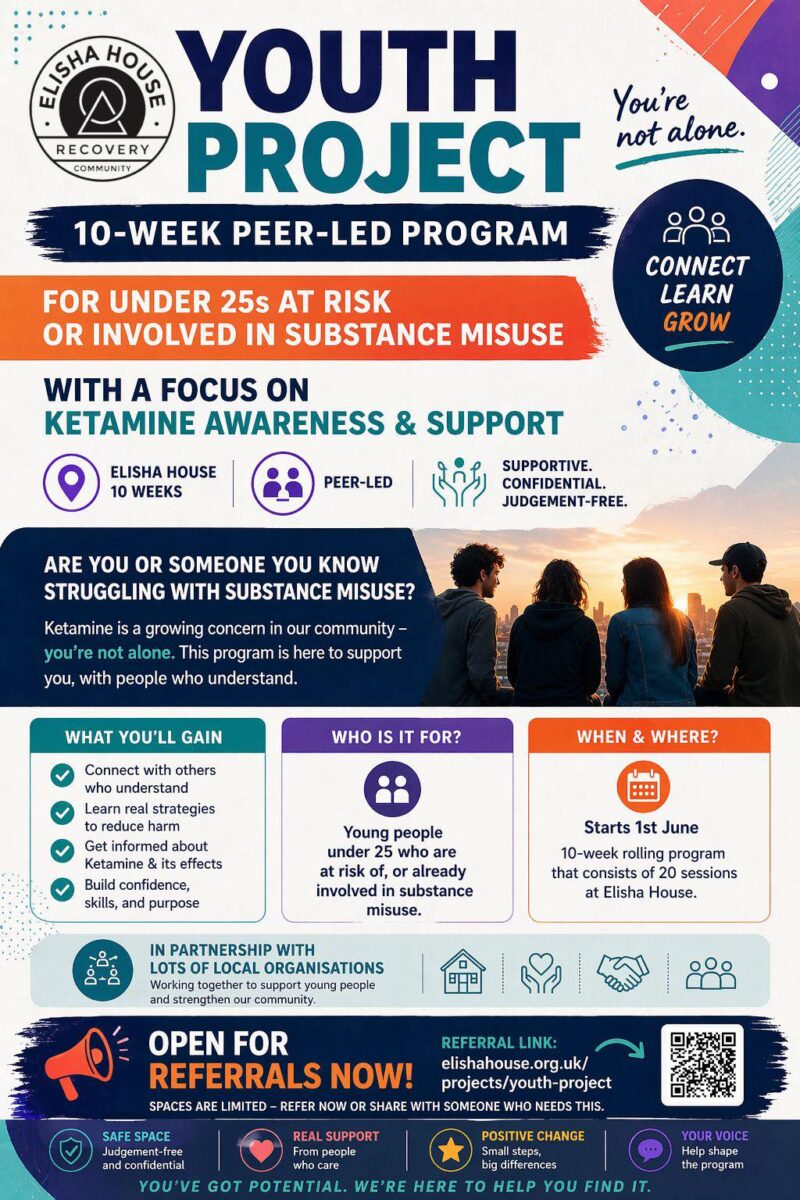
This year’s production also comes as Elisha House launches a new Youth Project from June 1st, supporting under-25s across Pendle who are at risk of or already affected by substance misuse, with a particular focus on ketamine awareness and support.
Following the success of a pilot scheme last year, the 10-week rolling programme will offer wellbeing sessions, personal development, activities and lived-experience mentoring, giving young people a safe place to connect, build confidence and find direction before addiction takes hold.
The man from Elisha House will play a key role in the project himself.
“We’re trying to give young people somewhere they feel understood,” he says. “Not judged.”
And maybe that idea — understanding instead of judgement — sits at the heart of everything Elisha House does.
Because theatre doesn’t end when the curtain closes or the lights go down.
It carries on afterwards.
In families reconnecting. In conversations on the way home. In people finally feeling seen. Young people need to find support before a crisis arrives. In communities, realising recovery doesn’t happen in isolation.
Behind the scenes, long after the applause fades, the real work continues.

Why Showing Up Matters
On Wednesday, July 1st at 7 pm, Elisha House Recovery Community returns to The Muni in Colne with its most ambitious production yet — raw, funny, heartbreaking, uplifting and unapologetically human.
And honestly, they need us in that audience.
Not in a grand, hand-wringing, ‘save the world’ kind of way. Nobody’s asking you to spend six months volunteering, climb Kilimanjaro for sponsorship, or stand outside the local shop rattling a charity tin in the rain.
They’re asking for a tenner. That’s it.
A tenner for a night out that will make you laugh, make you think, and quite possibly leave you blinking back tears before you’ve even reached the car park.
Theatre of Hope doesn’t stop when the curtain closes or the stage lights fade.
But more than that, your ticket helps keep something genuinely important alive in this community. Because Theatre of Hope doesn’t stop when the curtain closes or the stage lights fade. It carries on behind the scenes — in recovery meetings, in youth projects, in rebuilt families, in people choosing to stay alive another day.
That £10 isn’t just buying you a seat in a theatre. It’s backing people who are rebuilding themselves in public, with honesty, courage and no small amount of northern grit.
And in a world increasingly obsessed with scrolling past each other, maybe showing up for one another for a couple of hours is one of the most powerful things we can do.
And if last year proved anything, it’s this: Hope is far more powerful when it’s shared.